
Do all Animals Learn the Same Way?
A Hidden Bias in Animal Research
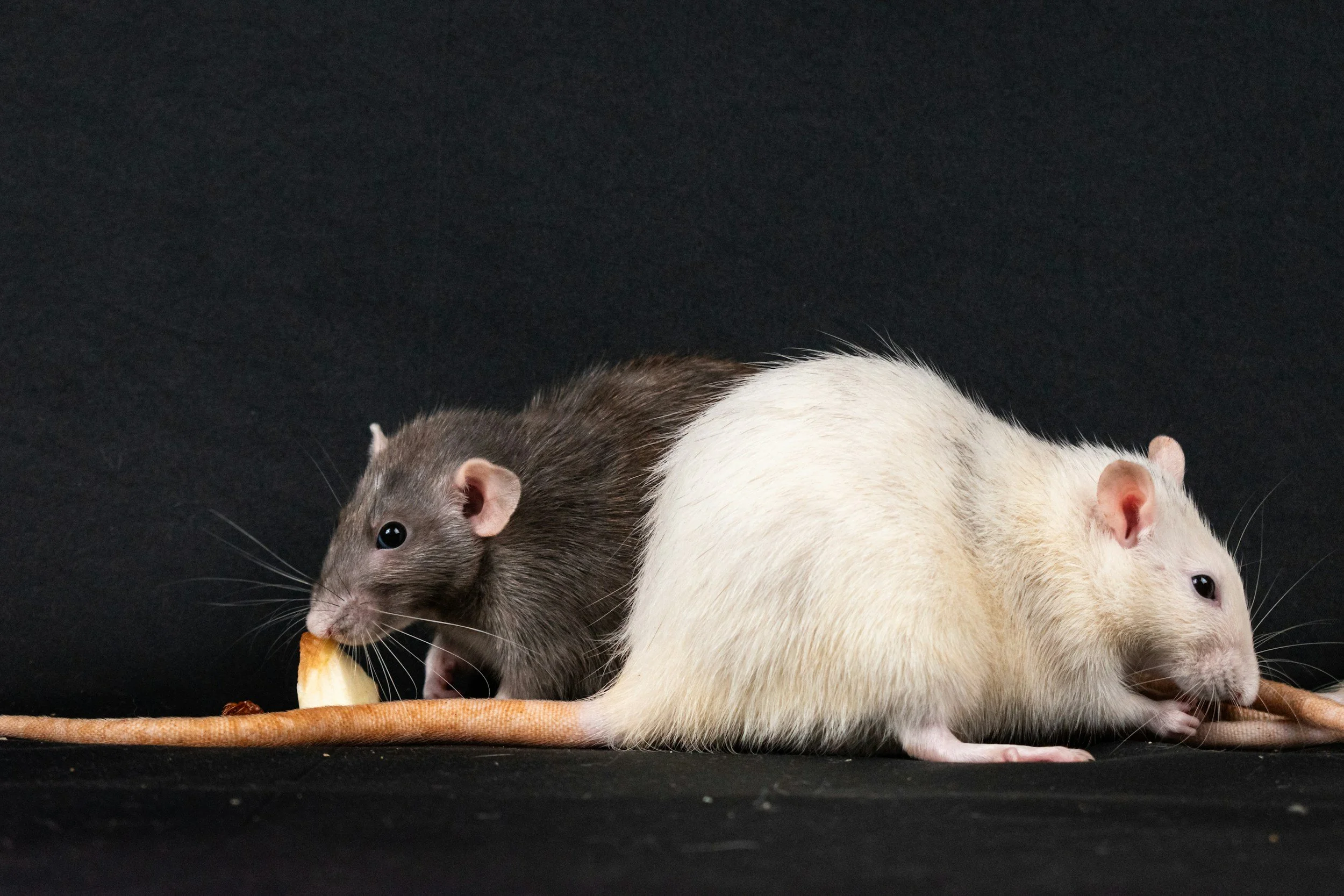
A core question that comparative psychology asks is “to what extent do principles of learning generalize across species?” This is an important question, but one that is difficult to answer when most research on behavior and learning is conducted only in a small number of species. Each approach to animal behavior exhibits its own taxonomic bias. In comparative psychology, rats and nonhuman primates are most common, in behavior analysis, male rats and pigeons are the dominant subjects and in ethology, songbirds are the most prevalent.
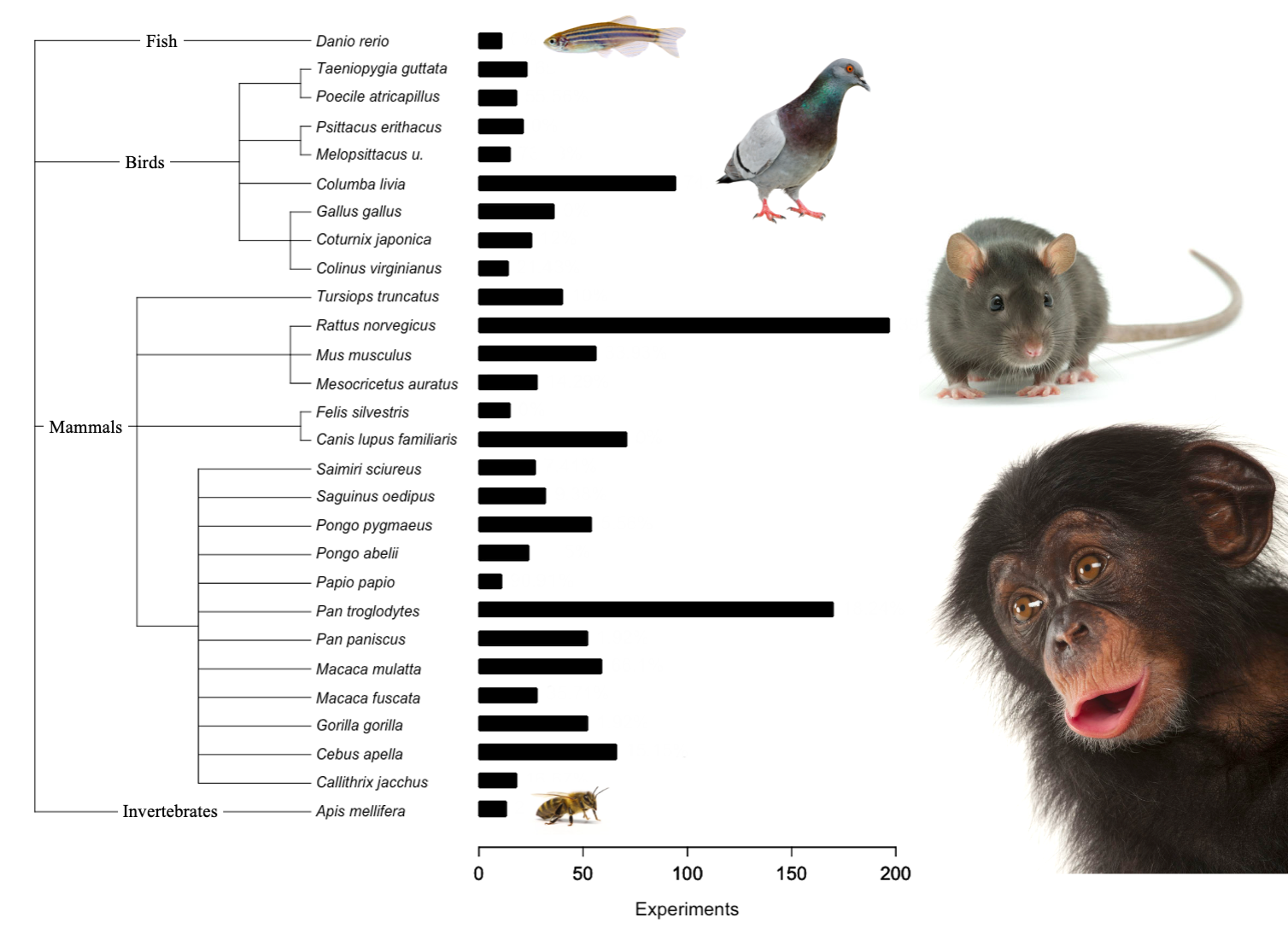
I’ve discussed this issue in several papers. The diagram is adapted from a review I conducted of studies published in comparative psychology journals between 2000 and 2016. Rats, chimpanzees, and pigeons were by far the most common species. Only a single fish species and a single insect species met the criterion. No reptiles or amphibians met the criteria at all. For a field named comparative psychology, it is often not very comparative. My review is far from the first to document this pattern.
Varnon, C. A., & Moore, M. K. (2024). Reconsidering the subject and object of comparative cognition. Comparative Cognition and Behavior Reviews, 19, 55-62. https://doi.org/10.3819/CCBR.2024.190019
Phyletic Differences in Learning
We know that learning is widespread across animal taxa, and that its underlying processes generalize across behaviors, species, and contexts, at least for commonly studied species. But do we have evidence for differences in learning across species? Does taxonomic bias actually matter? While these questions are rarely asked directly, M. E. Bitterman's work makes a compelling for species differences in learning.
In his "Phyletic Differences in Learning" paper, Bitterman studied learning across a range of species using two types of experiments, each with spatial and visual variants. The first was a serial reversal procedure, where animals learned which of two options produced reinforcement, then experienced repeated reversals of the correct and incorrect responses. Bitterman noted if the animals improved across successive reversals. The second was a probability learning task, where animals chose between two options with different reinforcement probabilities. He noted whether animals maximized (primarily selecting the higher-probability option) or matched (distributing responses in proportion to reinforcement rates).
The table is adapted from Bitterman's 1965 paper. The results reveal that commonly studied mammals and birds behave largely as expected, but these trends do not extend to underrepresented taxa. At minimum, his work suggests that species differences in learning may go undetected without methods carefully tailored to each species. I highly recommend a critical reading of this paper and the subsequent debate it generated.
| Spatial Tasks | Visual Tasks | |||
|---|---|---|---|---|
| Animal | Reversal | Probability | Reversal | Probability |
| Monkey | Improvement | Maximizing | Improvement | Maximizing |
| Rat | Improvement | Maximizing | Improvement | Maximizing |
| Pigeon | Improvement | Maximizing | Improvement | Matching |
| Turtle | Improvement | Maximizing | No Improvement | Matching |
| Fish | No Improvement | Matching | No Improvement | Matching |
| Cockroach | No Improvement | Matching | – | – |
| Earthworm | No Improvement | - | – | – |
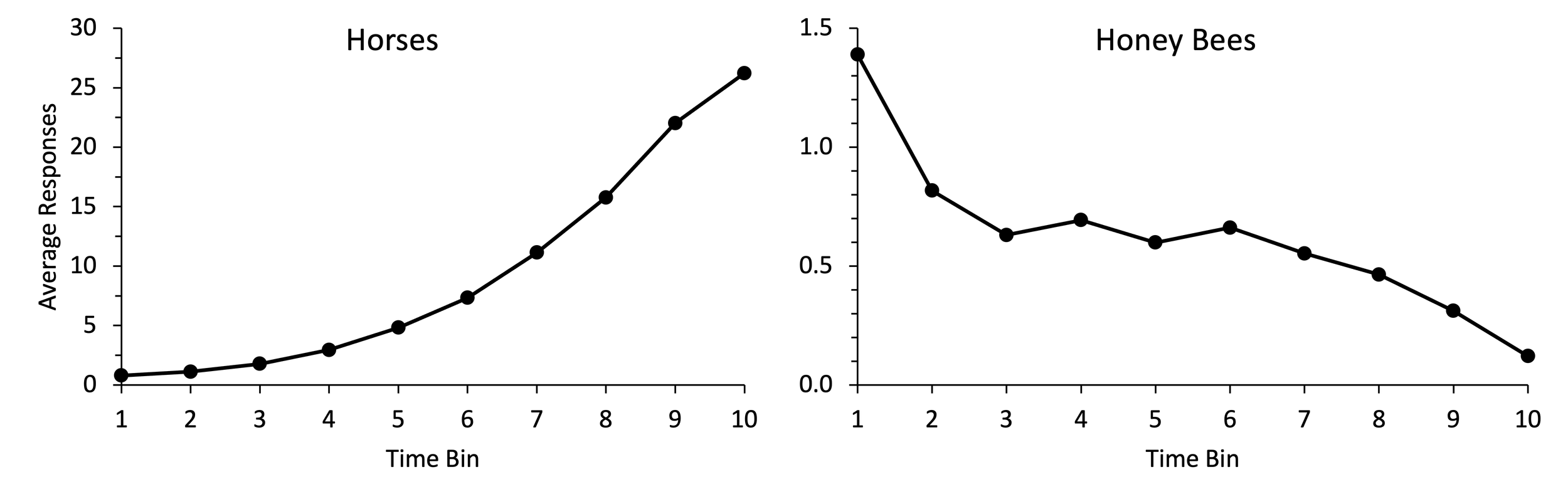
Species differences appear in other paradigms as well. For example, in fixed interval schedules of reinforcement, the typical scallop pattern represents response rates that gradually increase across the interval and peak just before reinforcement. This pattern is extremely common in mammals and birds, and is often assumed to be a general feature of fixed interval performance. But research outside of those groups tells a different story. In one set of experiments, my colleague David Craig and I investigated fixed interval schedule performance in horses and honey bees. Horses showed the typical scallop, while honey bees produced a very different pattern, responding primarily at the beginning of the interval rather than the end. The figures show data aggregated across individuals, schedules, and intervals from the final sessions of each experiment, so individual variation is not visible, but the overall difference is clear. This finding is not unique to our work. Outside of birds and mammals, the fixed interval scallop is not always observed.
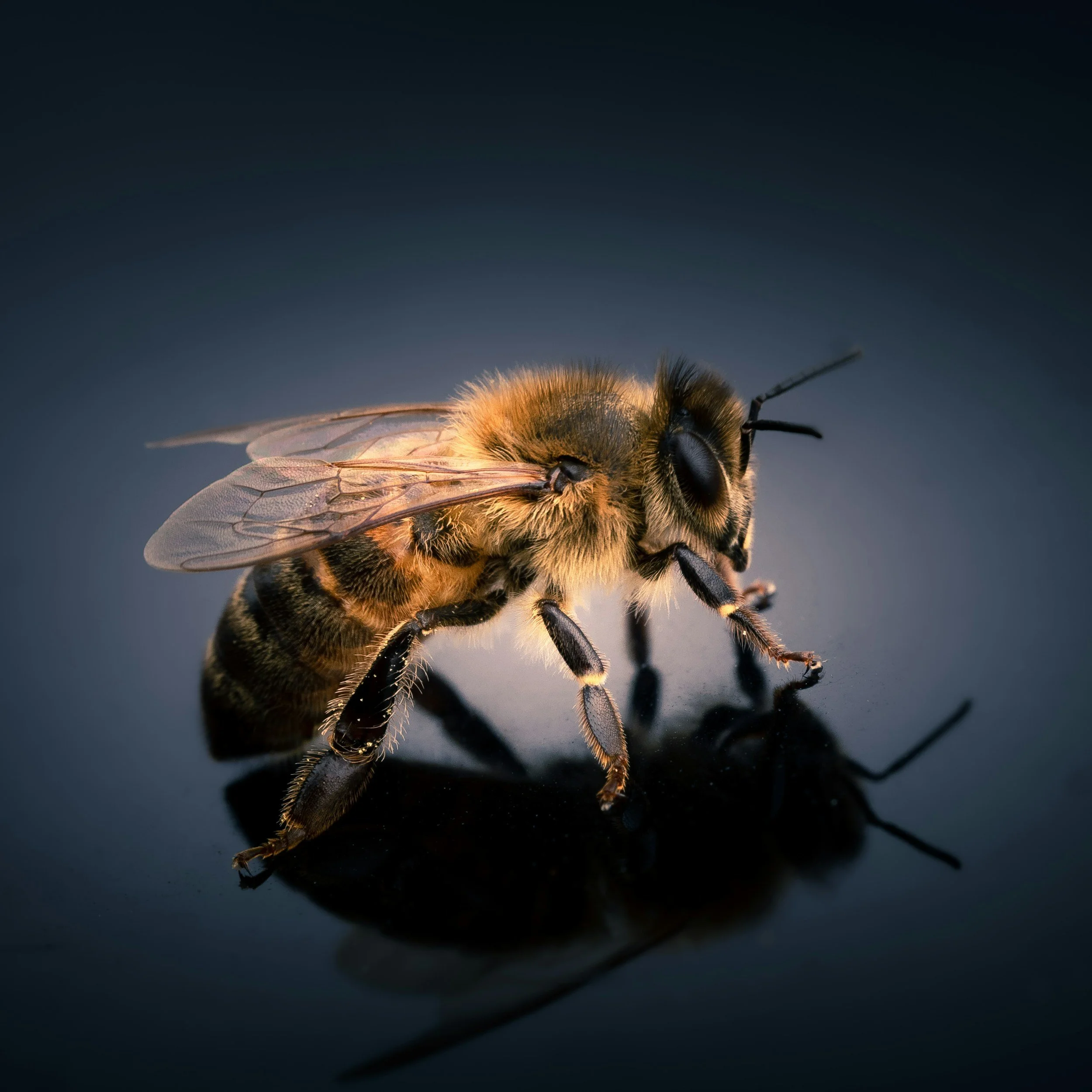
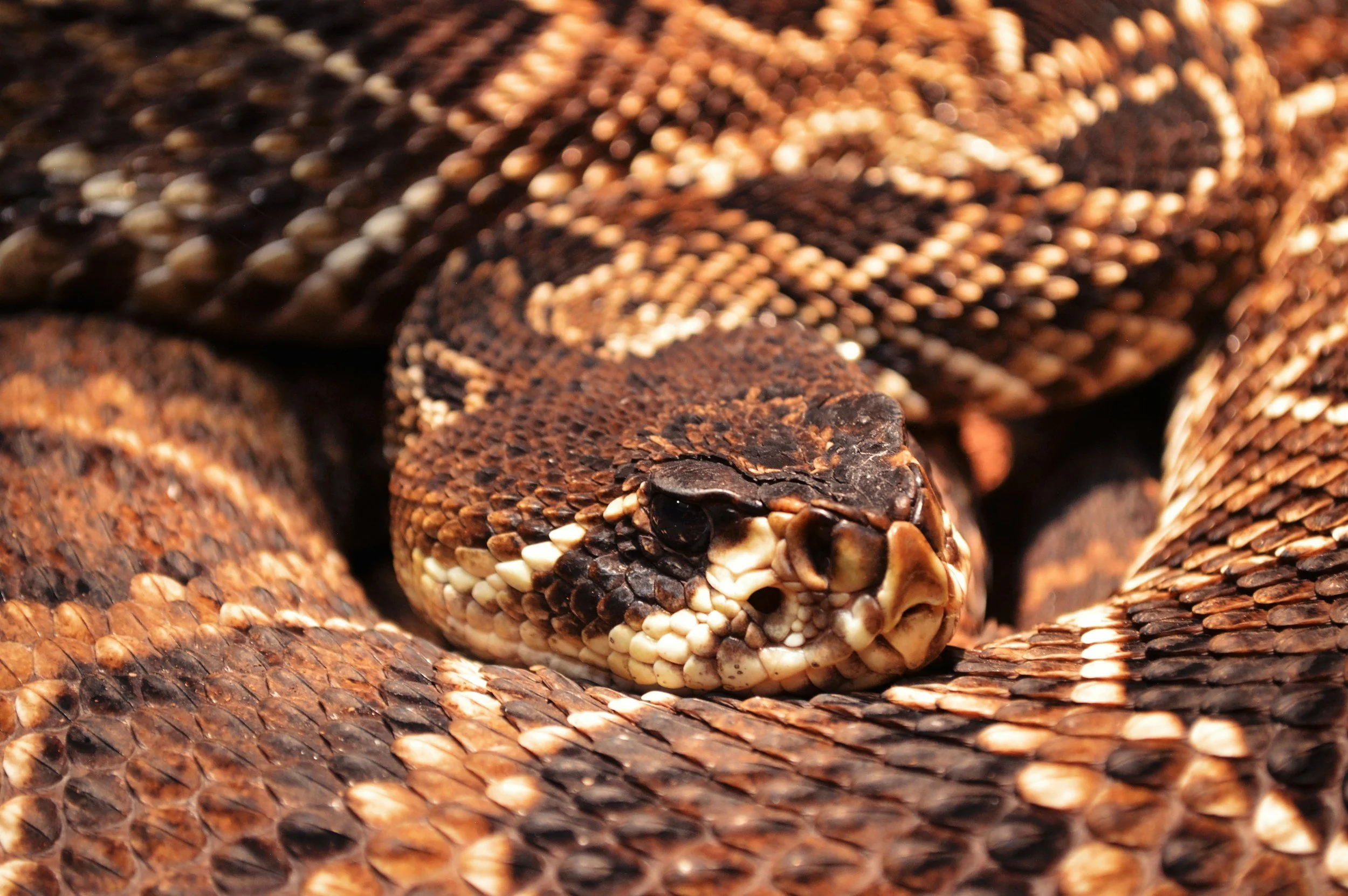
The species we choose to study matters. But knowing that taxonomic bias is a problem does not tell us which species to study next. The answer depends on your question. Some species are valuable because they fill a gap in the phylogenetic tree. Others are interesting because of their ecological niche. Even traditional species may provide new insights when studied in new contexts and paradigms. My work pursues these possibilities, often opportunistically through collaborations. The video shows an operant conditioning experiment with rattlesnakes. Rattlesnakes, and snakes in general, are rarely studied in a learning context, but this project suggests they are capable of learning through operant conditioning, using a temperature reduction as a reinforcer.
Place, A. J., Varnon, C. A., Craig, D. P. A., & Abramson, C. I. (2017). Exploratory investigations in operant thermoregulation in western diamond-backed rattlesnakes (Crotalus atrox). In M. J. Dreslik, W. K. Hayes, S. J. Beaupre, & S. P. Mackessy (Eds.), The Biology of Rattlesnakes II (pp. 213-227). ECO Herpetological Publishing and Distribution.
Coming soon: Invertebrates as Model Organisms