Invertebrate Models
Why Invertebrates?
- Comparative need
- Interesting in their own way
- Practical aspects
Honey Bees (Apis mellifera)
Honey bees are interesting creatures with many benefits as model organisms. They are well-established in behavior and learning literature, with many connections to neuroscience, agriculture and other areas.
One of the gold standards of insect conditioning is the proboscis extension response (PER) conditioning procedure in honey bees. First established by _______ and then later popularized by Bitterman in ____, this procedure… and has been used for …
The video, shows a demonstration…
- honey bee PER video
Honey bees also have some challenges as a model organism, or rather their specialization means they may not be ideal for every lab or line of research.
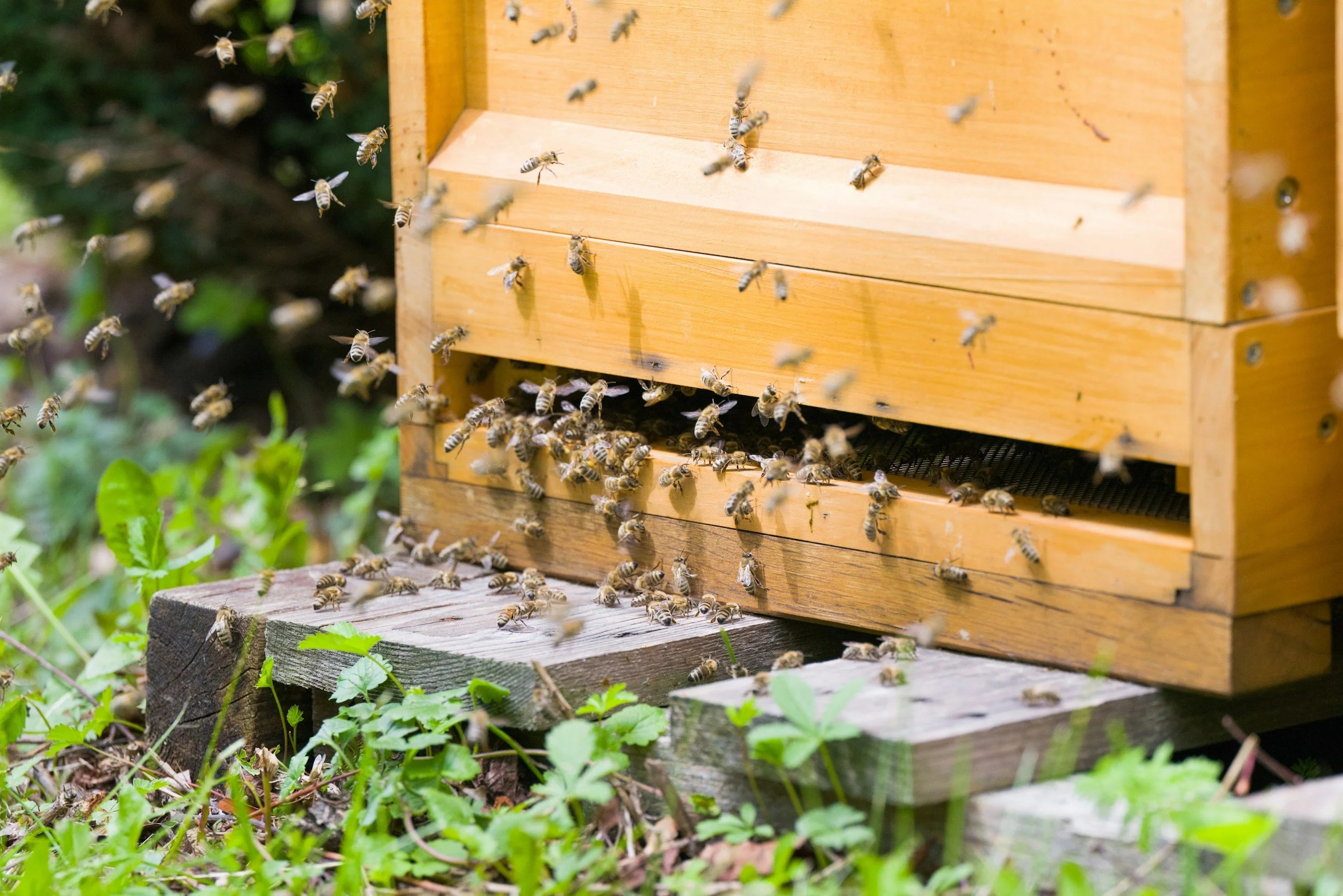
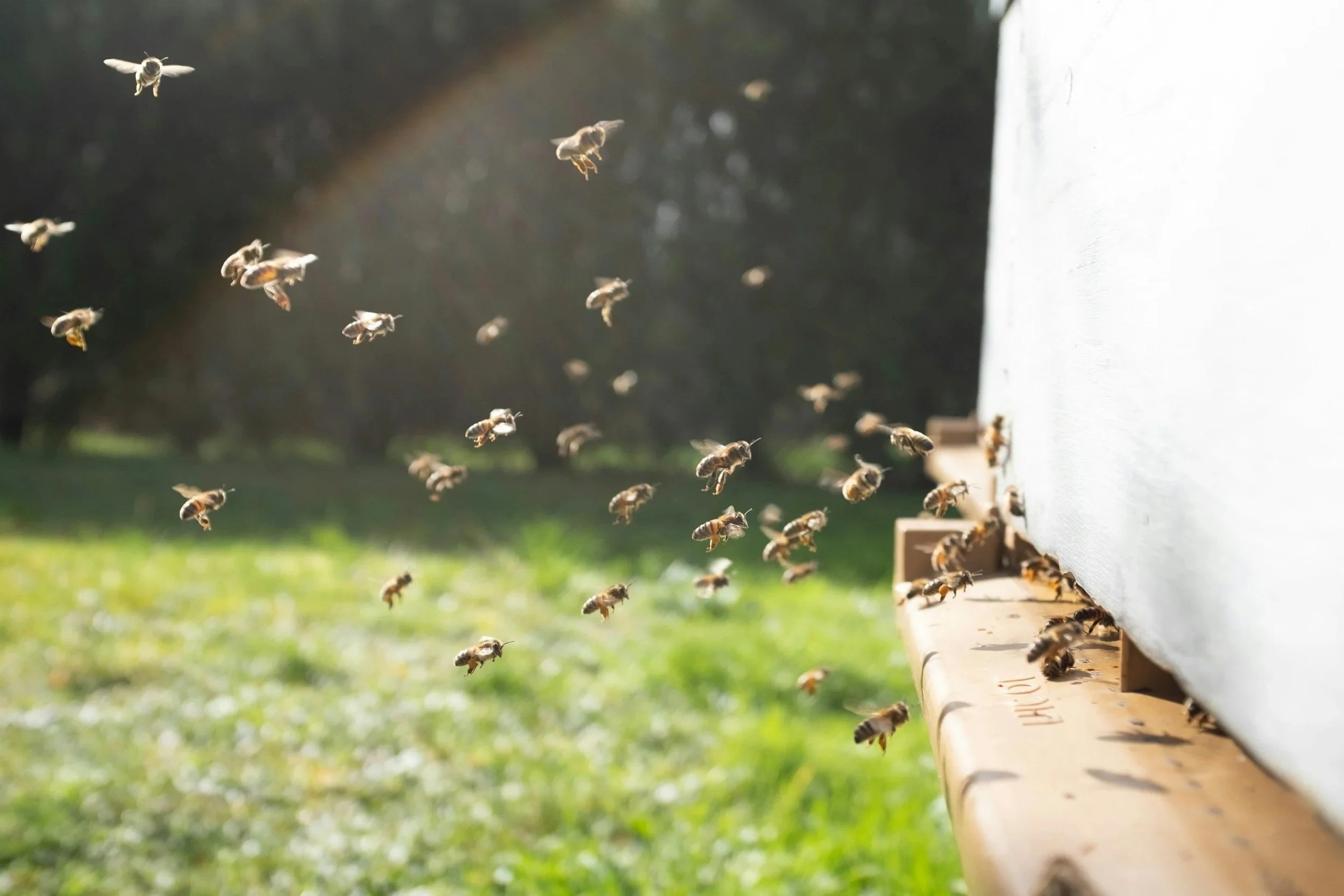
Honey bees are a eusocial colonial species. The sole purpose of the queens and drones is reproduction. Most psychological research studies only the worker bee. The workers themselves are specialized across lifespan, with younger bees doing more tasks inside the house like attending to larvae and the queen, while older bees forage for food. The foragers are neurologically distinct from other roles, and most learning research is specifically designed with foragers in mind. Even collecting bees directly from the hive rather than while feeding on flowers or artificial feeders may completely change the results of an experiment. This leads to a question of representativeness. When we discuss research on bees, are the findings representative of all bees, or just the workers? Or perhaps we should be asking if the findings generalize across worker roles.
Another interesting aspect of the eusocial bee's nature is that the worker bees’ behavior has very different selection pressure than that of a solitary or social species. Essentially, the worker bee has a very different form of fitness. She does not need to survive and cannot reproduce. It is only the colony’s survival and reproduction that matters. This may be why worker bees will die stinging a predatory… and it may affect how they learn in aversive tasks as well.
- honey bee free flight video?
- honey bee shuttle box video?
Bumble Bees (Bombus impatiens)
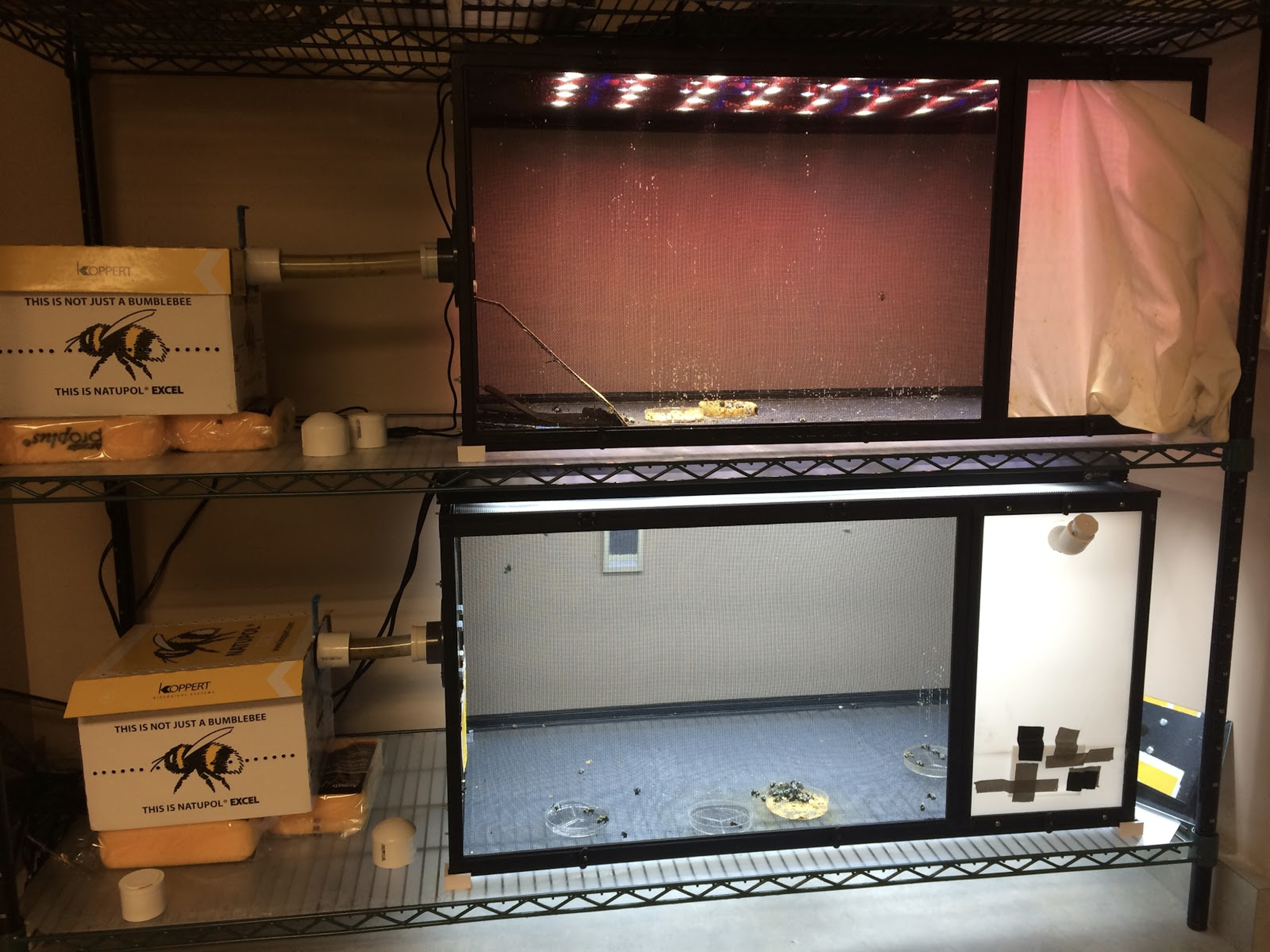
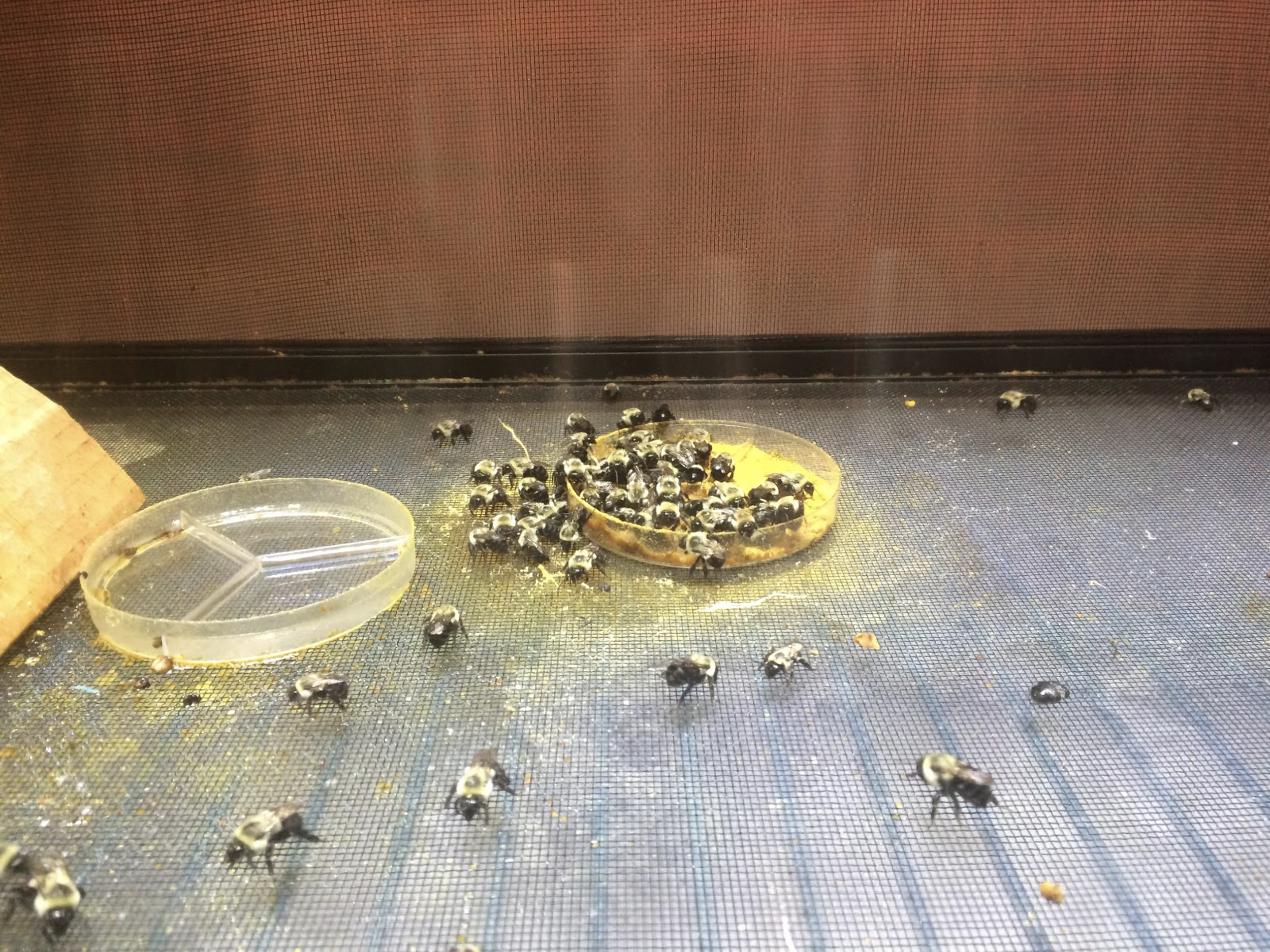
Honey bees come with a unique logistic constraint. They need to be maintained outside. When I started my first faculty appointment, I wanted to avoid this challenge, and so, like many labs in recent years, turned to bumble bees instead. Bumble bees are commercially breed for the purpose of greenhouse pollination and ?do? much better in greenhouses and indoors than honey bees.
- bumble bee dlr video
Invertebrate Models
Why Invertebrates?
- Comparative need
- Interesting in their own way
- Practical aspects
Honey Bees (Apis mellifera)
Honey bees are interesting creatures with many benefits as model organisms. They are well-established in behavior and learning literature, with many connections to neuroscience, agriculture and other areas.
One of the gold standards of insect conditioning is the proboscis extension response (PER) conditioning procedure in honey bees. First established by _______ and then later popularized by Bitterman in ____, this procedure… and has been used for …
The video, shows a demonstration…
- honey bee PER video
- honey bee free flight video?
- honey bee shuttle box video?
- bumble bee dlr video
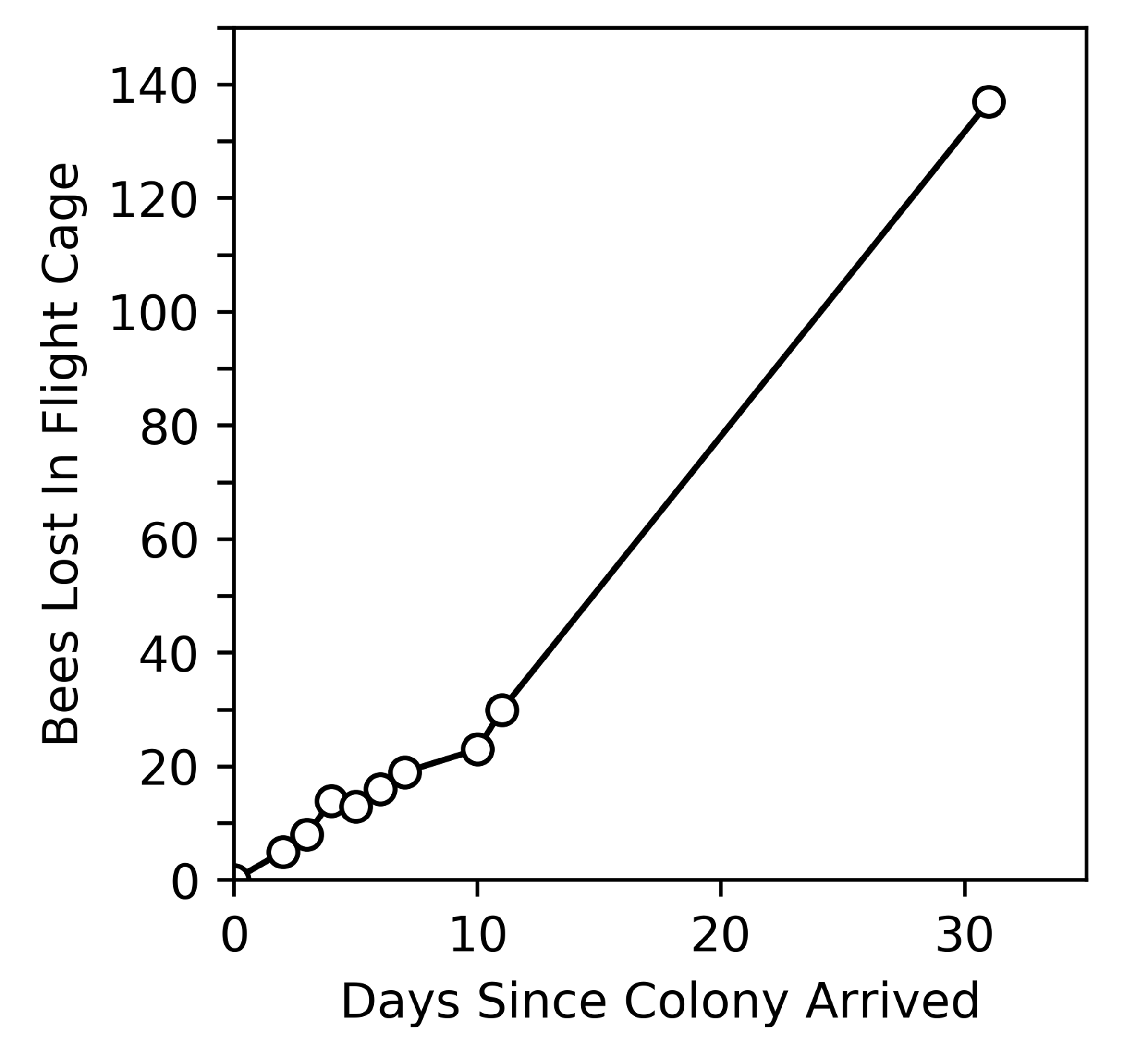
- lost bee effect
Honey bees also have some challenges as a model organism, or rather their specialization means they may not be ideal for every lab or line of research.
Honey bees are a eusocial colonial species. The sole purpose of the queens and drones is reproduction. Most psychological research studies only the worker bee. The workers themselves are specialized across lifespan, with younger bees doing more tasks inside the house like attending to larvae and the queen, while older bees forage for food. The foragers are neurologically distinct from other roles, and most learning research is specifically designed with foragers in mind. Even collecting bees directly from the hive rather than while feeding on flowers or artificial feeders may completely change the results of an experiment. This leads to a question of representativeness. When we discuss research on bees, are the findings representative of all bees, or just the workers? Or perhaps we should be asking if the findings generalize across worker roles.
Another interesting aspect of the eusocial bee's nature is that the worker bees’ behavior has very different selection pressure than that of a solitary or social species. Essentially, the worker bee has a very different form of fitness. She does not need to survive and cannot reproduce. It is only the colony’s survival and reproduction that matters. This may be why worker bees will die stinging a predatory… and it may affect how they learn in aversive tasks as well.
- honey bee free flight video?
- honey bee shuttle box video?
- bumble bee dlr video
- lost bee effect
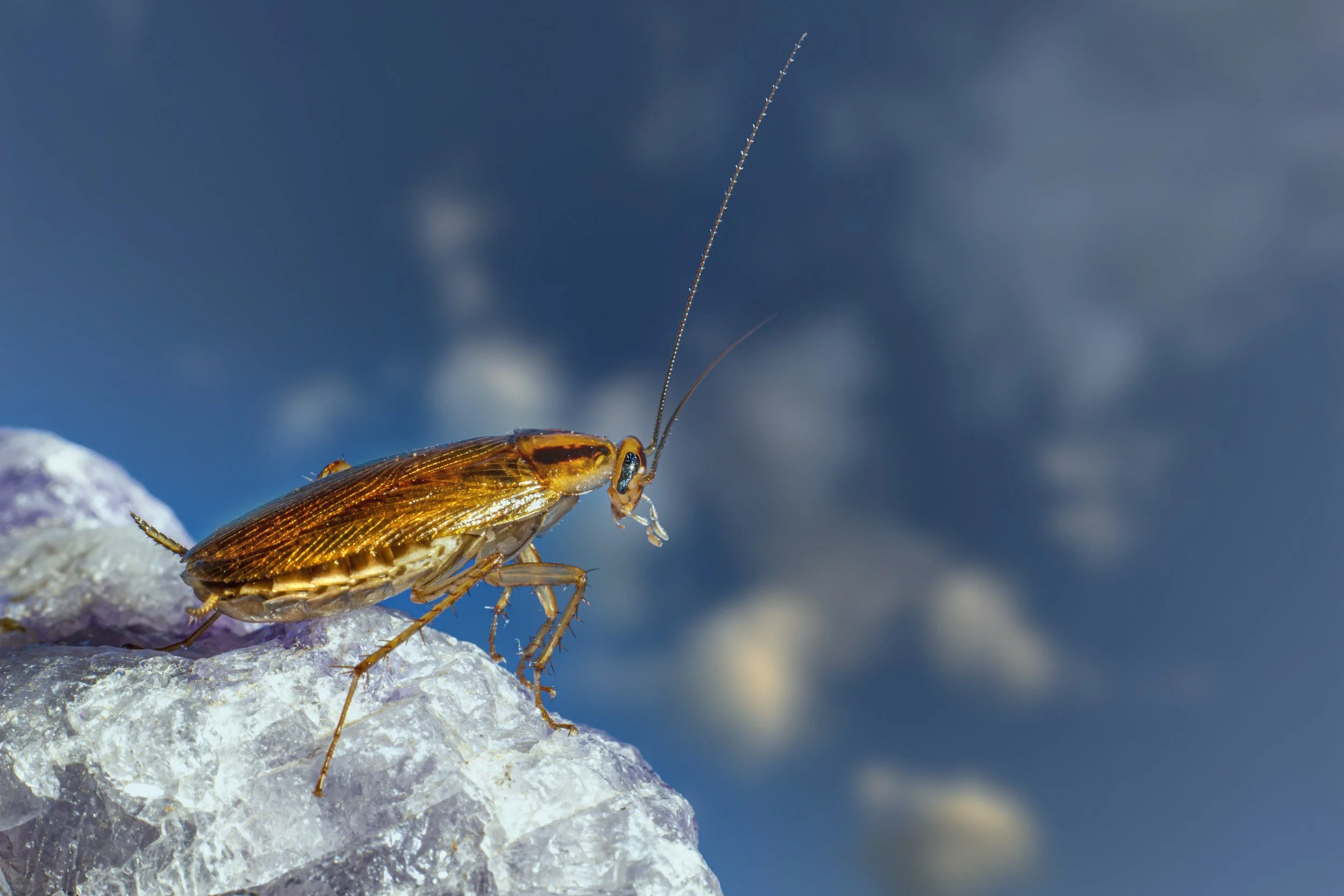
Cockroaches
- Why cockroaches?
- hissing cockroach hiss habituation video clip
- orange head habituation data and video
- orange head appetitive conditioning clips
- open t-maze clip
- open field clip and analysis
Crayfish?
- Why crayfish
- Short section
Cockroaches
- Why cockroaches?
- hissing cockroach hiss habituation video clip
- orange head habituation data and video
- orange head appetitive conditioning clips
- open t-maze clip
- open field clip and analysis
Quantitative and Computational Behavior Section
Entropy
Markov
Machine Reinforcement Learning
link to operant simulations
don’t forget classical conditioning
Education Research Section
Animal activities
Simulations
Assessment